
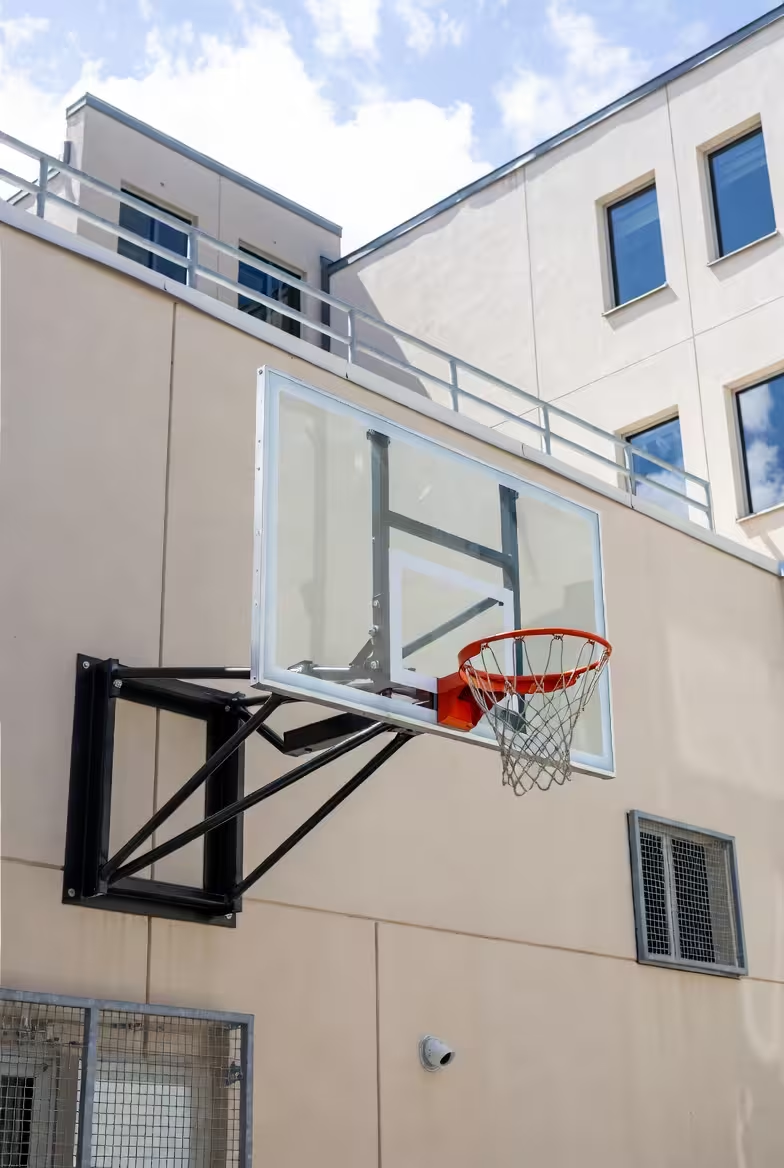
Installing a basketball hoop in your backyard is an exciting way to bring fun, exercise, and family time to your home. But before you start digging or setting up that new goal, one critical question often arises: Do I need a permit to install a basketball hoop? The answer depends on your location, the type of hoop, and local rules. Understanding basketball hoop installation permits can save you time, money, and potential fines.
Whether you're considering a portable basketball hoop or a permanent in-ground system, this guide covers backyard basketball hoop regulations, permit requirements, HOA considerations, and why working with professionals makes the process smoother.
When Do You Need a Permit for Basketball Hoop Installation?
Permit requirements vary widely by city, county, and state, but here are the general guidelines:
- Portable or mobile basketball hoops (those on a base filled with water/sand or on wheels): In most areas, these do not require a permit. They are temporary and movable, so they typically fall outside building code restrictions.
- In-ground basketball hoops (permanent poles set in concrete): These often require a permit because they involve excavation, concrete pouring, and create a fixed structure. Many municipalities classify them as accessory structures, similar to sheds or fences.
- Full backyard basketball courts (with concrete slab, lighting, or fencing): Almost always need permits due to grading, drainage, electrical work, and larger-scale construction.
Always check with your local building department or planning office first. Search for “[your city] building permits basketball hoop” to find specific rules.

Local Building Codes and Zoning Regulations for Basketball Hoops
Local building codes focus on safety, setbacks, and structural integrity:
- Setback requirements: Hoops must be placed a certain distance from property lines, streets, sidewalks, or utilities (often 5–15 feet).
- Depth and foundation: In-ground installations usually require a hole 3–4 feet deep with concrete footing to prevent tipping or shifting.
- Utility lines: Before digging, call 811 (in the US) to mark underground lines. Hitting a gas or electric line can be dangerous and expensive.
- Height and placement: Some areas restrict hoop height or placement near driveways to avoid obstructing visibility.
Failing to comply can lead to stop-work orders, fines ($250–$2000+), or forced removal.
HOA Rules for Backyard Basketball Hoops
If you live in a homeowners association (HOA), their covenants, conditions, and restrictions (CC&Rs) often override local laws for aesthetics and community standards:
- Many HOAs prohibit or limit basketball hoops in front yards, driveways, or visible areas.
- Some allow only portable hoops or require approval for in-ground systems.
- Lighting, noise, or court size may be restricted.
Submit plans to your HOA board early—professional installers can provide drawings and specs to speed approval.
Steps to Obtain Basketball Hoop Installation Permits
- Research local rules — Contact your city or county building department.
- Check HOA guidelines — If applicable, get written approval.
- Call before you dig — Use 811 to mark utilities.
- Submit application — Provide site plans, hoop specs, and fees (typically $100–$300).
- Schedule inspections — After installation, an inspector verifies compliance.
- Install safely — Hire professionals to ensure everything meets code.
Professional installers handle paperwork, know local requirements, and avoid common mistakes.
Why Choose Professional Basketball Hoop Installation?
At Basketballsinstallers.com, our experts handle basketball hoop installation permits, site preparation, concrete work, and final setup. We:
- Navigate local codes and HOA rules for you.
- Ensure proper setbacks, foundation depth, and safety.
- Provide warranties and quality installations that last.
DIY attempts often lead to permit issues, uneven poles, or code violations. Let pros save you headaches.


